Teardowns › Pricing & paywalls › Regret aversion (risk reversal)
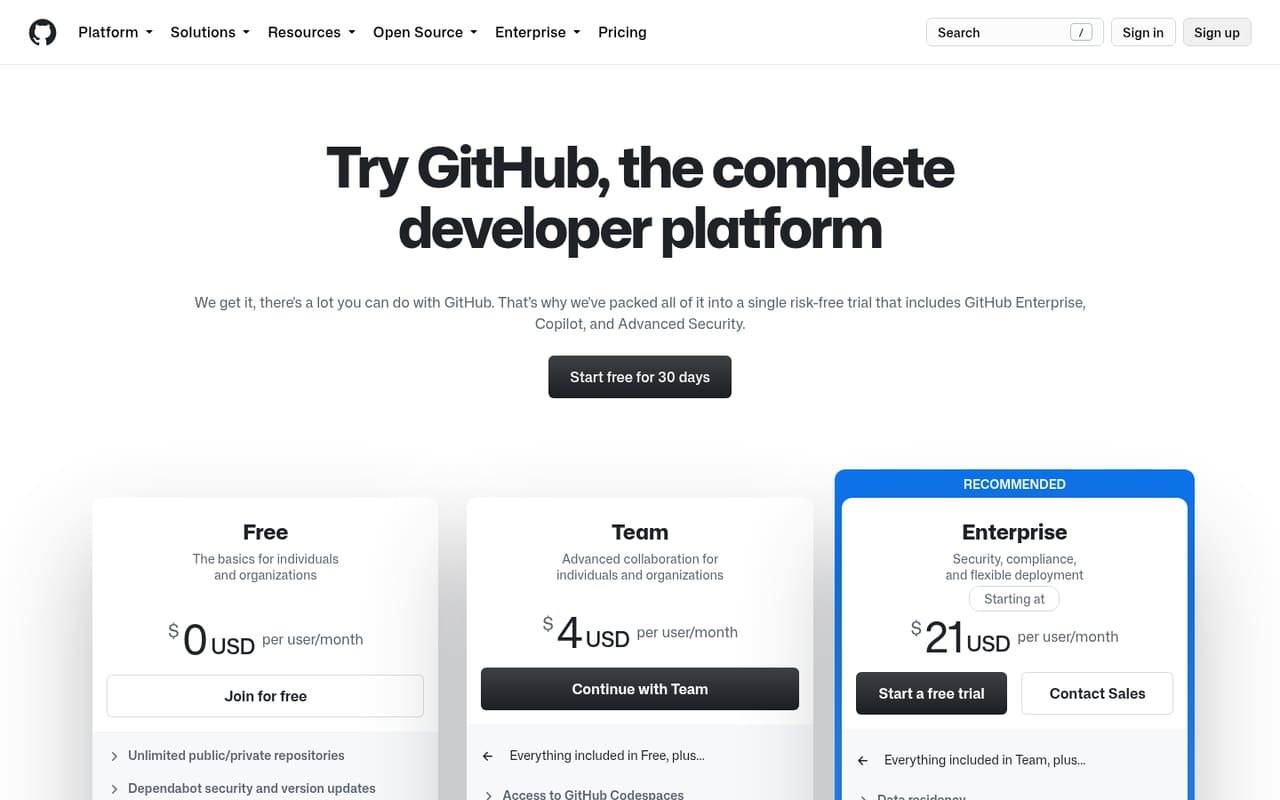
GitHub opens its pricing page with a "risk-free" 30-day trial
Step by step
- 1Regret aversion
The headline: "Try GitHub, the complete developer platform".
- 2Regret aversion
"…we've packed all of it into a single risk-free trial that includes GitHub Enterprise, Copilot, and Advanced Security."
- 3Authority
The Enterprise tier is labelled "RECOMMENDED".
The psychology
Why it nudges
"Risk-free" goes straight at the fear of committing to a tool your team might regret. Bundling everything into one trial avoids a confusing choice between plans. The "RECOMMENDED" label is a recommendation cue; it doesn't preselect anything. Whether this lifts Enterprise trials for GitHub is not public.
● Strong evidence · More on regret aversion (risk reversal), with sources →
Context
A developer platform with a large free tier, selling paid seats to organisations.
Honest nudge or dark pattern?
Honest nudge
Honest nudge as captured. We haven't checked whether the trial charges automatically when it ends; "risk-free" should mean it doesn't.
Steal this, honestly
- If your trial needs no card or commitment, say "risk-free" and explain why.
- Recommend one plan, and say who it suits.
What to test: Trial-first hero vs plan-table-first. Measure trial starts and seats bought after the trial.
Next: run it on your product
Apply this with your agent
Take the steps above into your own flow. The prompt carries this teardown, the honest-vs-dark line and the steps.
ChatGPT, Claude, Grok and Cursor open with the prompt filled in (it is also copied, in case the prefill doesn't load). Gemini and Codex don't support prefilled links, so the prompt is copied and the app opens; paste it in.
Sources
- Our capture of github.com, 16 Oct 2026
- Simonson (1992), The influence of anticipating regret and responsibility on purchase decisions. doi.org/10.1086/209290
Related teardowns

5 new nudges, every Friday
Five real product and marketing moments, the psychology behind each, and one thing to try. Weekly issues start soon. Your email is stored with our email provider (Resend) and used only for this newsletter.