Teardowns › Homepages & product pages › Optimism bias
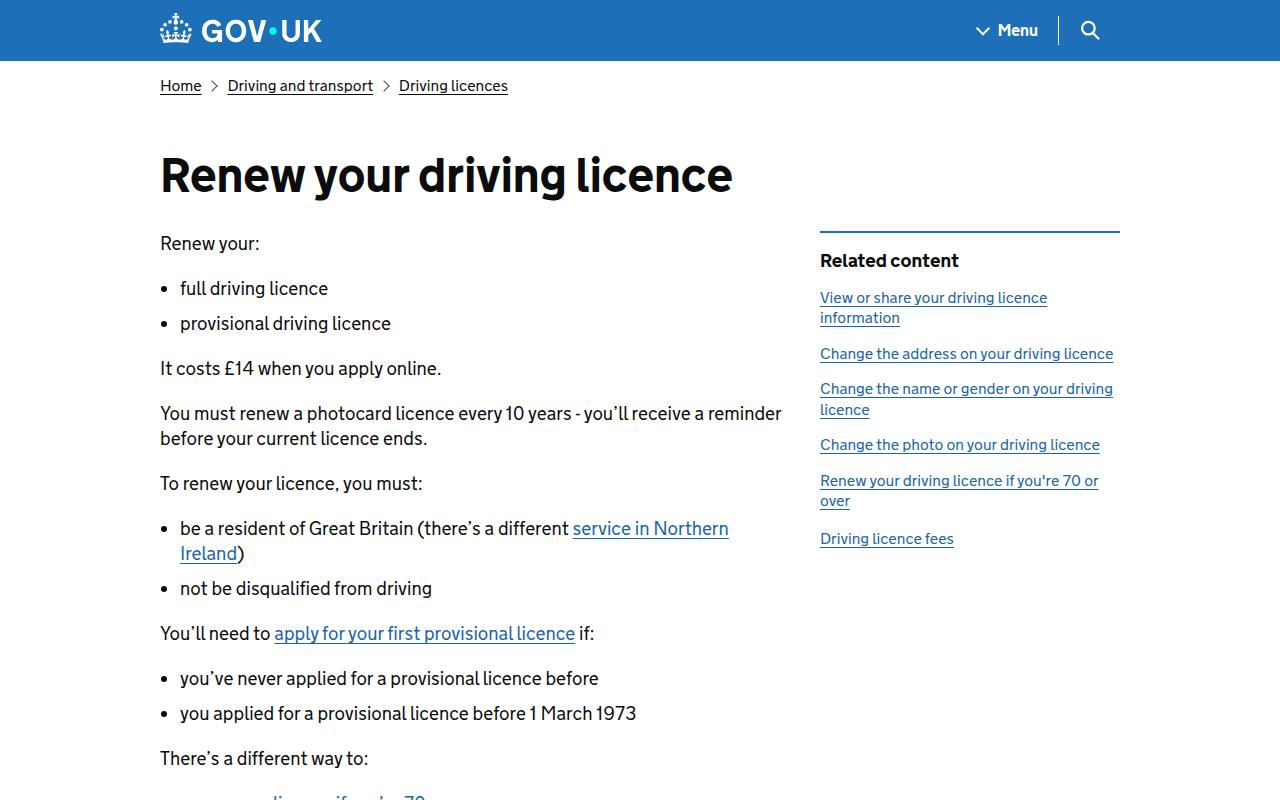
GOV.UK says a reminder arrives before your licence ends
Put the reminder in the same sentence as the deadline, before the person starts.
Step by step
- 1Optimism bias
“you’ll receive a reminder before your current licence ends.”
Prices quoted in pounds (£), exactly as shown on the page we captured. Prices vary by region and change over time.
5 new nudges, every Friday
Five real product and marketing moments, one thing to try from each, and the psychology behind it. Weekly issues start soon. Your email is stored with our email provider (Resend) and used only for this newsletter.
What to steal
- Put the reminder in the same sentence as the deadline, before the person starts.
- Print the price on that screen too. This one says “It costs £14 when you apply online.”
What to test next: The page with the reminder sentence vs the same page that only says the licence must be renewed every 10 years. Measure renewals started before the expiry month.
In plain words
Why it works
GOV.UK counters optimism bias: people treat an inconvenient future event as less likely for them than for someone else, including forgetting a date (Weinstein 1980). The page states the rule and the protection in one sentence. “You must renew a photocard licence every 10 years - you’ll receive a reminder before your current licence ends.” Above it: “It costs £14 when you apply online.” The reminder does not depend on the driver remembering a date ten years away. Whether that reminder lifts on-time renewals is not public.
Honest nudge or dark pattern?
Honest nudge
Honest nudge: the 10-year rule, the reminder and the £14 online cost are on the screen before you start.
Sources: Captured by Nudgeswipe, 4 Nov 2026 (UK service page, logged out)
Context
GOV.UK, “Renew your driving licence”, logged out, on 4 Nov 2026. Additional cookies were rejected and the cookie message was hidden. The page lists full and provisional licences.
The research
The research behind it
● Strong evidence (provisional) · More on optimism bias, with sources →
Next: run it on your product
Try it on your own product
Opens your assistant with this teardown, our verdict and the steps above. It asks about your product first, then suggests tests you can run.
Read the prompt, or use another assistant
Grok and Cursor open with the prompt filled in. Gemini and Codex can’t take a prefilled link, so the prompt is copied and you paste it in.
Sources
- Our capture of gov.uk, 4 Nov 2026
- Weinstein (1980), Unrealistic optimism about future life events. doi.org/10.1037/0022-3514.39.5.806
- Captured by Nudgeswipe, 4 Nov 2026 (UK service page, logged out): gov.uk
5 new nudges, every Friday
Five real product and marketing moments, one thing to try from each, and the psychology behind it. Weekly issues start soon. Your email is stored with our email provider (Resend) and used only for this newsletter.