Teardowns › Homepages & product pages › Cognitive load
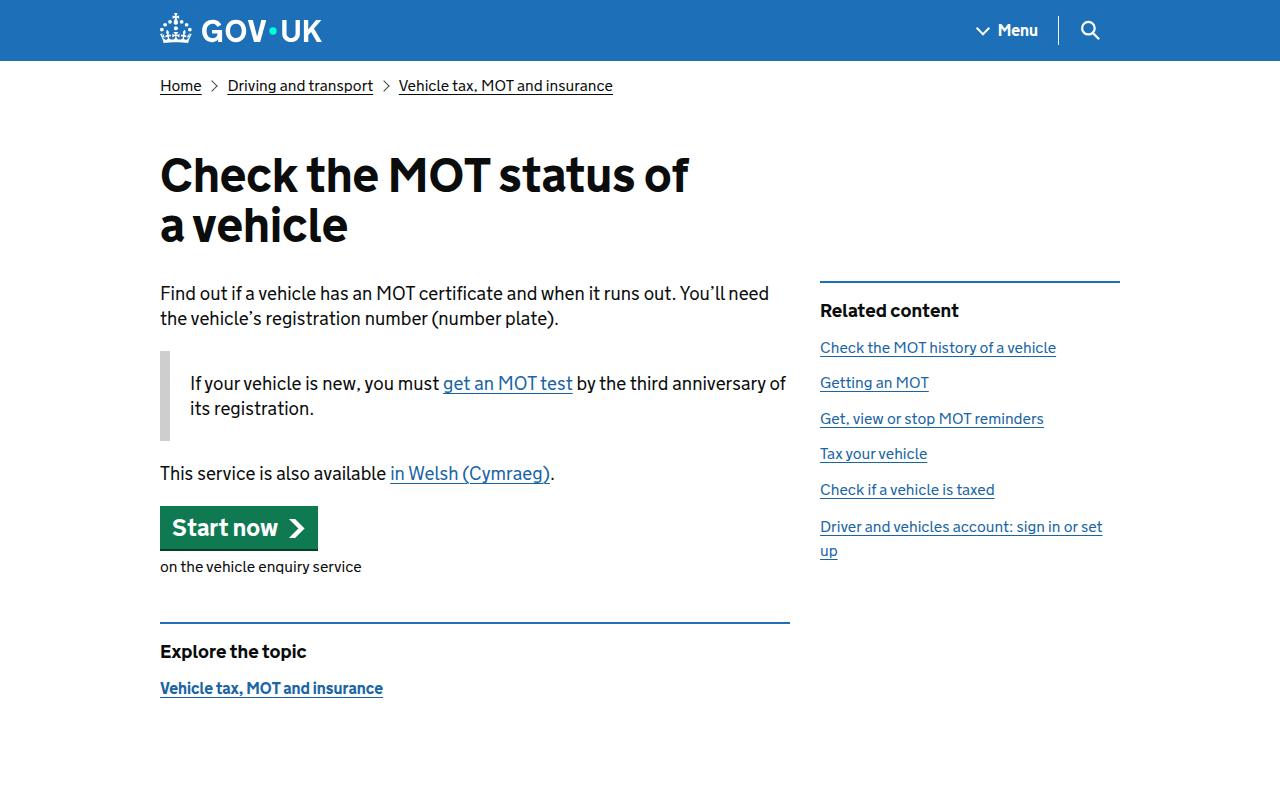
GOV.UK asks for a number plate, then a large Start now
Name the one thing the person needs before the button.
Step by step
- 1Cognitive load
“You’ll need the vehicle’s registration number (number plate).”
- 2Fitts’s law
“Start now”
5 new nudges, every Friday
Five real product and marketing moments, one thing to try from each, and the psychology behind it. Weekly issues start soon. Your email is stored with our email provider (Resend) and used only for this newsletter.
What to steal
- Name the one thing the person needs before the button. Here it is the registration number.
- Make the primary action a large button and keep the other links smaller.
What to test next: This page vs the same task with the registration number explained only after Start now. Measure checks completed and time to the first result.
In plain words
Why it works
GOV.UK uses cognitive load: detail that does not help the task uses up the effort people have for it (Sweller 1988). This page asks for one fact. “Find out if a vehicle has an MOT certificate and when it runs out. You’ll need the vehicle’s registration number (number plate).” Under that is a green “Start now” button, with “on the vehicle enquiry service” beneath it. The button is the large, close target Fitts’s law is about: the time to hit a target depends on its size and distance (Fitts 1954). Other links, such as “Check the MOT history of a vehicle”, stay in a smaller list on the right. Whether the short page makes more people finish the check is not public.
Honest nudge or dark pattern?
Honest nudge
Honest nudge: the only requirement is named before you start, the button says “Start now”, and the Welsh version is linked on the same screen.
Sources: Captured by Nudgeswipe, 4 Nov 2026 (UK service page, logged out)
Context
GOV.UK, “Check the MOT status of a vehicle”, logged out, on 4 Nov 2026. Additional cookies were rejected and the cookie message was hidden. The page also links “in Welsh (Cymraeg)”.
Next: run it on your product
Try it on your own product
Opens your assistant with this teardown, our verdict and the steps above. It asks about your product first, then suggests tests you can run.
Read the prompt, or use another assistant
Grok and Cursor open with the prompt filled in. Gemini and Codex can’t take a prefilled link, so the prompt is copied and you paste it in.
Sources
- Our capture of gov.uk, 4 Nov 2026
- Sweller (1988), Cognitive Load During Problem Solving: Effects on Learning. doi.org/10.1207/s15516709cog1202_4
- Captured by Nudgeswipe, 4 Nov 2026 (UK service page, logged out): gov.uk
5 new nudges, every Friday
Five real product and marketing moments, one thing to try from each, and the psychology behind it. Weekly issues start soon. Your email is stored with our email provider (Resend) and used only for this newsletter.