Teardowns › Onboarding & retention › Goal gradient (incl. endowed progress)
LinkedIn turns profile completion into a meter
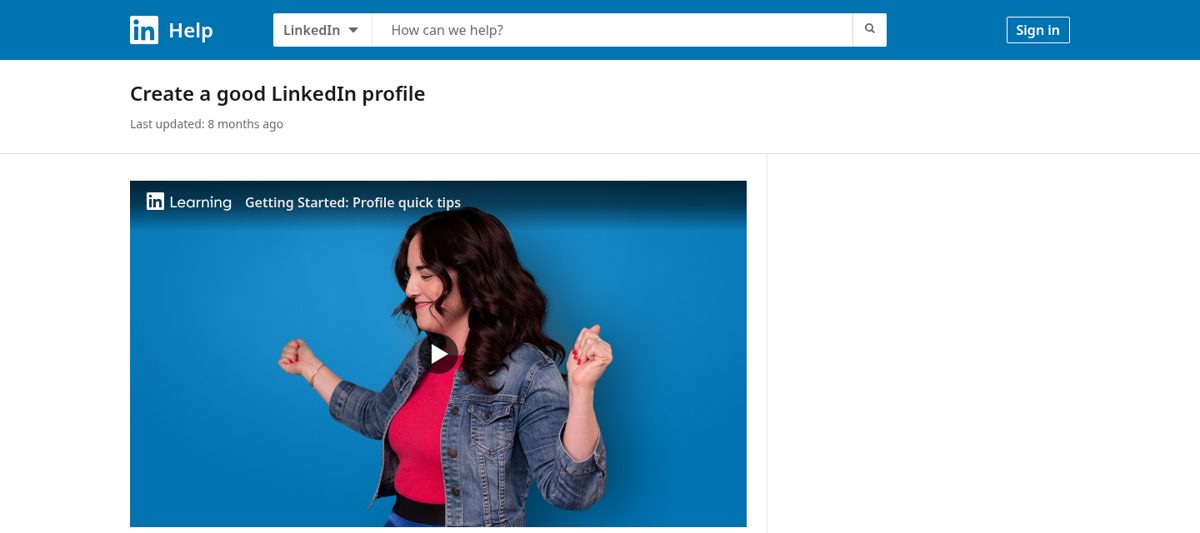
Step by step
- 1
LinkedIn's Help article "Create a good LinkedIn profile".
- 2
It tells members: "Use your profile strength meter to gauge the strength of your profile."
- 3
The meter frames setup as progress towards a stronger profile rather than a list of empty fields.
The psychology
Why it nudges
LinkedIn uses goal gradient: a visible measure of progress gives people a reason to take the next step, and effort tends to rise as the goal gets closer. Whether the meter starts part-filled (which would add endowed progress) isn't shown in the Help page we captured, so we haven't claimed it. Completion rates are not public.
● Strong evidence · More on goal gradient (incl. endowed progress), with sources →
Context
A professional network that needs complete profiles to power search, recommendations and recruiting. The help page is aimed at members setting up or improving a profile.
Honest nudge or dark pattern?
Honest nudge
Honest nudge. It would cross a line if the meter required sharing data that isn't needed for the product to work.
Steal this, honestly
- Replace a setup checklist with a single progress measure.
- Show the next step and what it adds, not just the percentage.
- Count steps the user has already done (account created, email verified) towards the bar, if they're genuinely part of setup.
What to test: Checklist vs progress meter in onboarding. Measure the share of users who complete setup within 7 days.
Next: run it on your product
Apply this with your agent
Take the steps above into your own flow. The prompt carries this teardown, the honest-vs-dark line and the steps.
ChatGPT, Claude, Grok and Cursor open with the prompt filled in (it is also copied, in case the prefill doesn't load). Gemini and Codex don't support prefilled links, so the prompt is copied and the app opens; paste it in.
Sources
- Our capture of linkedin.com, 16 Oct 2026
- Kivetz, Urminsky & Zheng (2006). Endowed progress: Nunes & Drèze (2006). doi.org/10.1509/jmkr.43.1.39
Related teardowns
5 new nudges, every Friday
Five real product and marketing moments, the psychology behind each, and one thing to try. Weekly issues start soon. Your email is stored with our email provider (Resend) and used only for this newsletter.