Biases › Motivation
Motivation
Commitment & consistency
A small yes makes a bigger yes easier.
After a small commitment, people act to stay consistent with it.
Freedman & Fraser (1966), Compliance without pressure: the foot-in-the-door technique.
What is Commitment & consistency?
Commitment & consistency is a behavioural bias (motivation family): after a small commitment, people act to stay consistent with it. Agreeing to a small request makes agreeing to a larger related one more likely (foot-in-the-door). Nudgeswipe rates the evidence as strong. Source: Freedman & Fraser (1966), Compliance without pressure: the foot-in-the-door technique.
The original study
Freedman & Fraser (1966), Compliance without pressure: the foot-in-the-door technique.
- Method
- Householders were first asked a small favour (e.g. a small sign or petition), then later a much larger one: putting up a large sign about driving carefully.
- What it found
- People who agreed to the small request were much more likely to agree to the large one.
Replications and critiques
- Burger (1999) reviewed the foot-in-the-door literature and meta-analyses: the effect is real but depends on conditions, and sometimes fails or backfires. Source →
The research
Agreeing to a small request makes agreeing to a larger related one more likely (foot-in-the-door). Public or repeated commitments, like a streak, strengthen this.
● Strong evidence
Source: doi.org/10.1037/h0023552
Key takeaways
- Honest nudge
Start with a small, genuine yes.
Example: NOW strikes through £7.99 for £4.99, with a 6-month minimum term → - Dark-pattern line
Escalating asks the user never agreed to.
Use it
Apply this with your agent
The prompt carries this bias, its evidence rating and the honest-vs-dark line.
ChatGPT, Claude, Grok and Cursor open with the prompt filled in (it is also copied, in case the prefill doesn't load). Gemini and Codex don't support prefilled links, so the prompt is copied and the app opens; paste it in.
Frequently asked questions
What is Commitment & consistency?
Commitment & consistency is a behavioural bias: after a small commitment, people act to stay consistent with it.
How does Commitment & consistency work?
Agreeing to a small request makes agreeing to a larger related one more likely (foot-in-the-door). Public or repeated commitments, like a streak, strengthen this.
How strong is the evidence for Commitment & consistency?
Nudgeswipe rates it strong evidence. Original source: Freedman & Fraser (1966), Compliance without pressure: the foot-in-the-door technique.
How can you use Commitment & consistency honestly?
Start with a small, genuine yes.
When does Commitment & consistency become a dark pattern?
Escalating asks the user never agreed to.
Which brands use Commitment & consistency?
Nudgeswipe has 4 teardowns of brands using it, including Duolingo, NOW, Noom, RSPCA. Whether it lifted their results is not public unless a teardown cites it.
In the wild
4 real examples
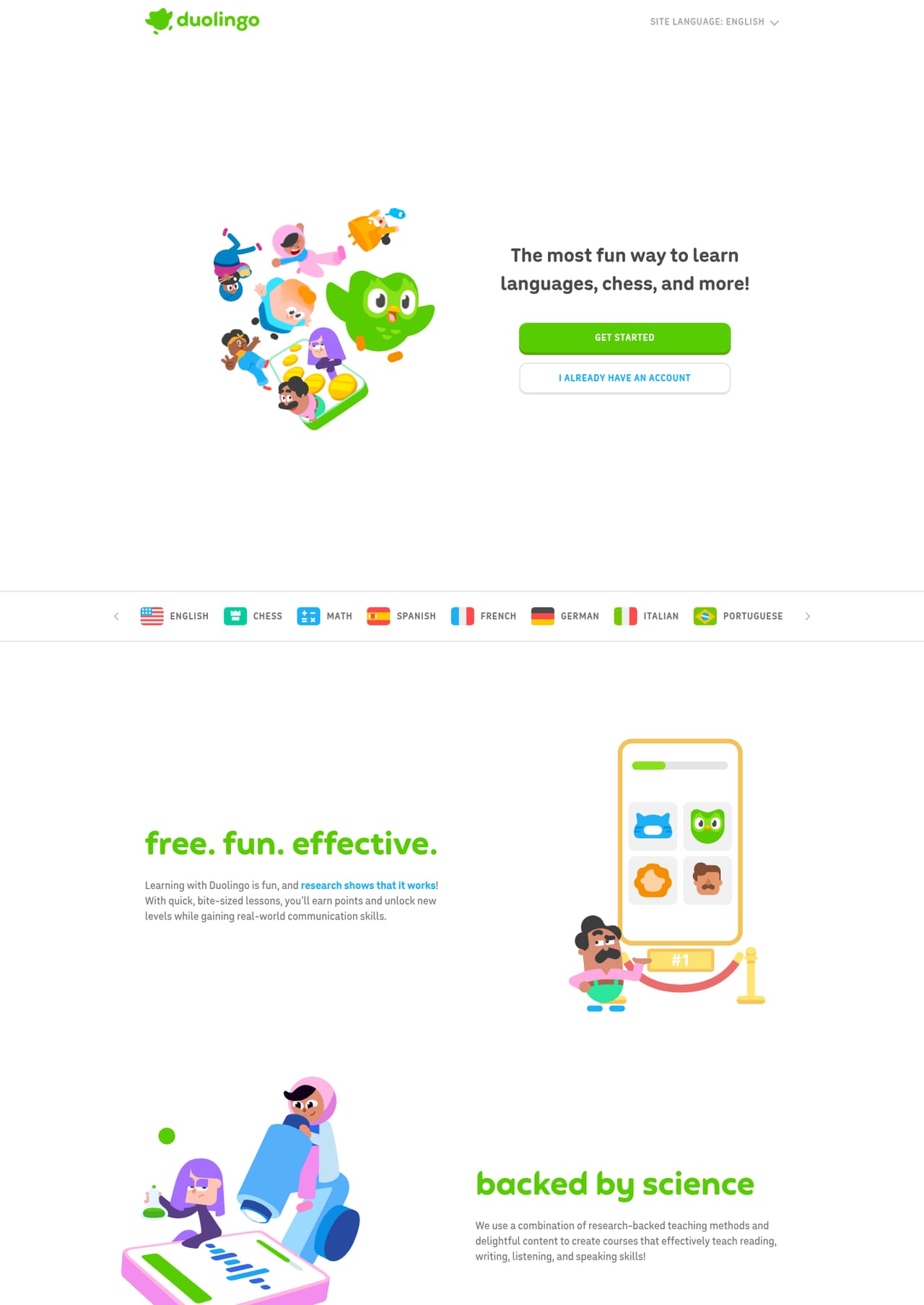
Duolingo explains its own streak in behavioural terms
Duolingo · Product / retention

NOW strikes through £7.99 for £4.99, with a 6-month minimum term
NOW · Homepage · £ as captured

Noom asks "See if you qualify" rather than "Buy"
Noom · Homepage
[Name], take 2 minutes to save our wildlife 🦡
RSPCA asks for 2 minutes, then offers a bigger ask
RSPCA · Email
5 new nudges, every Friday
Five real product and marketing moments, the psychology behind each, and one thing to try. Weekly issues start soon. Your email is stored with our email provider (Resend) and used only for this newsletter.