Teardowns › Onboarding & retention › Loss aversion
Duolingo explains its own streak in behavioural terms
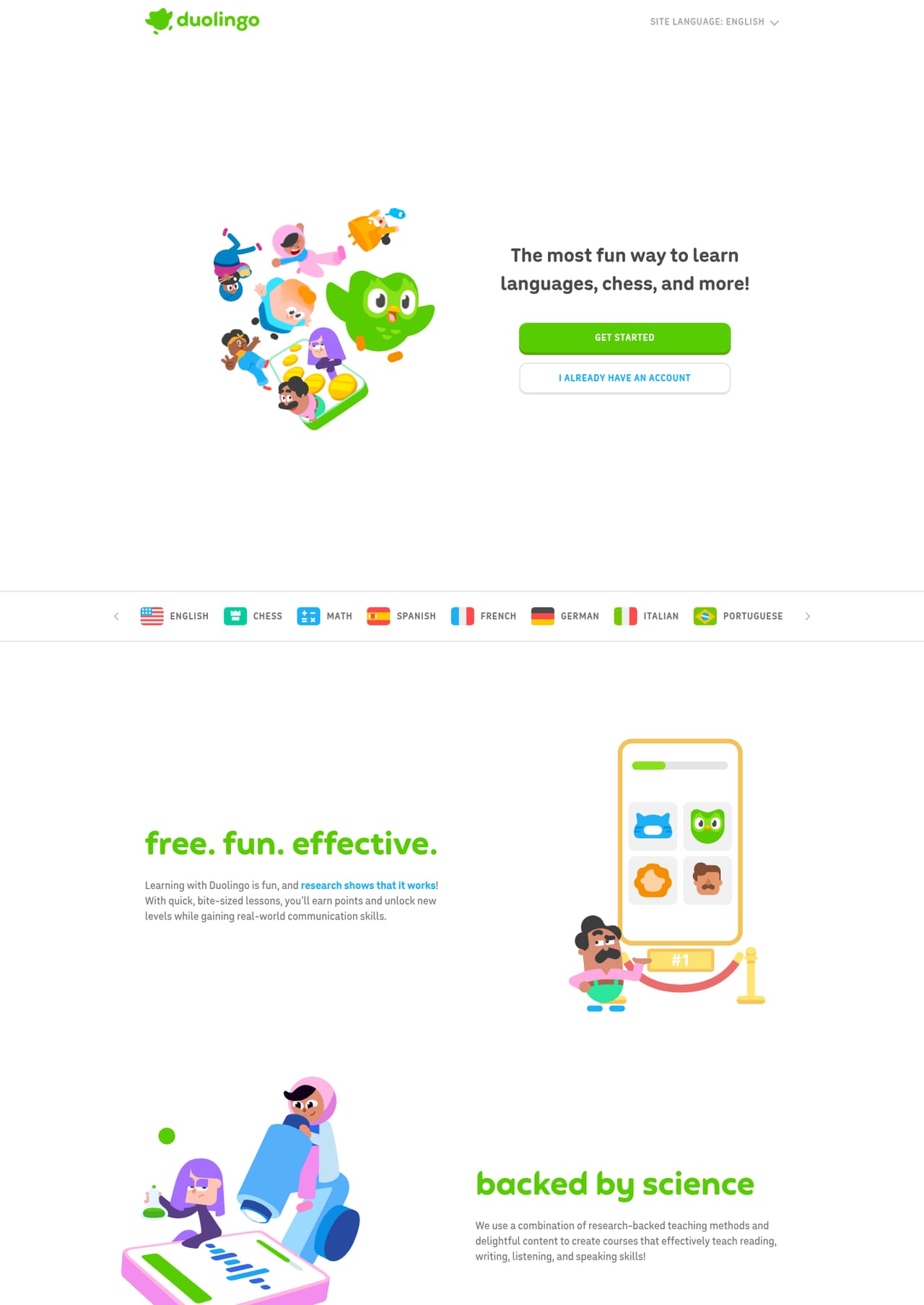
Step by step
- 1
Duolingo's blog post: "the habit-building research behind your duolingo streak".
- 2
It describes the streak as "the feature that tracks the number of days in a row you've completed a lesson".
- 3
The post names "loss aversion" as part of why a streak motivates, and says thousands of people share their streaks on social media every day.
The psychology
Why it nudges
Duolingo uses loss aversion: a streak builds up value that one missed day would wipe out, so keeping it feels more urgent than earning something new. It also uses commitment and consistency: each day extends a visible record you don't want to break. Duolingo describes the design rationale publicly; this teardown doesn't claim any retention numbers beyond what Duolingo publishes.
● Mixed evidence · More on loss aversion, with sources →
Context
A consumer learning app where daily practice is the core habit. The streak is a retention mechanic aimed at returning learners.
What they've said publicly
Duolingo reports that learners who reach a 7-day streak are 2.4 times more likely to keep using the app the next day, and that separating the daily goal from the streak (so one lesson extends it) raised Day 14 retention by 3.3% in an A/B test.
Duolingo reports (company A/B test, not independently verified) →Duolingo reports that letting learners equip up to two Streak Freezes increased the "relative number of active learners… every day" by 0.38%.
Duolingo reports (company A/B test, not independently verified) →Duolingo reports that learners offered a "Weekend Amulet" were 4% more likely to return a week later and 5% less likely to lose their streak.
Duolingo reports (company A/B test, not independently verified) →
Companies tend to publish their wins, so treat these results as selective. [Inference]
Honest nudge or dark pattern?
Conditional
Honest nudge as long as reminders inform rather than shame. Guilt-tripping notifications cross into confirmshaming. See deceptive.design/confirmshaming.
Steal this, honestly
- Count consecutive days of the action you want (logins, sends, workouts) and show the number prominently.
- Add a forgiving mechanic so one slip doesn't end it, so people don't quit after losing it.
- Explain the mechanic openly, as Duolingo does. It builds trust.
What to test: A streak counter with and without a 'freeze' option. Measure 30-day retention and how many lapsed users come back.
Next: run it on your product
Apply this with your agent
Take the steps above into your own flow. The prompt carries this teardown, the honest-vs-dark line and the steps.
ChatGPT, Claude, Grok and Cursor open with the prompt filled in (it is also copied, in case the prefill doesn't load). Gemini and Codex don't support prefilled links, so the prompt is copied and the app opens; paste it in.
Sources
- Our capture of blog.duolingo.com, 16 Oct 2026
- Kahneman & Tversky (1979), Prospect theory. Critique: Gal & Rucker (2018). doi.org/10.2307/1914185
- Duolingo reports (company A/B test, not independently verified): blog.duolingo.com
- Duolingo reports (company A/B test, not independently verified): blog.duolingo.com
- Duolingo reports (company A/B test, not independently verified): blog.duolingo.com
- deceptive.design: confirmshaming
Related teardowns

5 new nudges, every Friday
Five real product and marketing moments, the psychology behind each, and one thing to try. Weekly issues start soon. Your email is stored with our email provider (Resend) and used only for this newsletter.