Biases › Social
Social
Reciprocity
A gift creates a quiet urge to give something back.
A favour received creates a felt obligation to return it.
Regan (1971), Effects of a favor and liking on compliance.
What is Reciprocity?
Reciprocity is a behavioural bias (social family): A favour received creates a felt obligation to return it. Even a small unsolicited favour increases compliance with a later request, regardless of liking. Nudgeswipe rates the evidence as strong. Source: Regan (1971), Effects of a favor and liking on compliance.
The original study
Regan (1971), Effects of a favor and liking on compliance.
- Method
- A confederate either bought the participant an unrequested soft drink or didn't, then later asked them to buy raffle tickets.
- What it found
- The favour increased ticket buying. Liking didn't explain it: Regan attributed the effect to pressure to reciprocate.
The research
Even a small unsolicited favour increases compliance with a later request, regardless of liking. Free tools, templates and samples work this way. It is strongest for unconditional gifts; a coupon that only pays out if you buy borrows the framing (mixed evidence).
● Strong evidence
Key takeaways
- Honest nudge
Give something genuinely useful before you ask.
Example: The Guardian asks readers to give back for journalism they already read free → - Dark-pattern line
'Gifts' that commit the user to something they didn't agree to.
Grey-area example: Tea Forté makes referral a two-way gift, and offers a snooze →
Use it
Apply this with your agent
The prompt carries this bias, its evidence rating and the honest-vs-dark line.
ChatGPT, Claude, Grok and Cursor open with the prompt filled in (it is also copied, in case the prefill doesn't load). Gemini and Codex don't support prefilled links, so the prompt is copied and the app opens; paste it in.
Frequently asked questions
What is Reciprocity?
Reciprocity is a behavioural bias: A favour received creates a felt obligation to return it.
How does Reciprocity work?
Even a small unsolicited favour increases compliance with a later request, regardless of liking. Free tools, templates and samples work this way. It is strongest for unconditional gifts; a coupon that only pays out if you buy borrows the framing (mixed evidence).
How strong is the evidence for Reciprocity?
Nudgeswipe rates it strong evidence. Original source: Regan (1971), Effects of a favor and liking on compliance.
How can you use Reciprocity honestly?
Give something genuinely useful before you ask.
When does Reciprocity become a dark pattern?
'Gifts' that commit the user to something they didn't agree to.
Which brands use Reciprocity?
Nudgeswipe has 4 teardowns of brands using it, including The Guardian, Flow, Tea Forté, Castlery. Whether it lifted their results is not public unless a teardown cites it.
In the wild
4 real examples
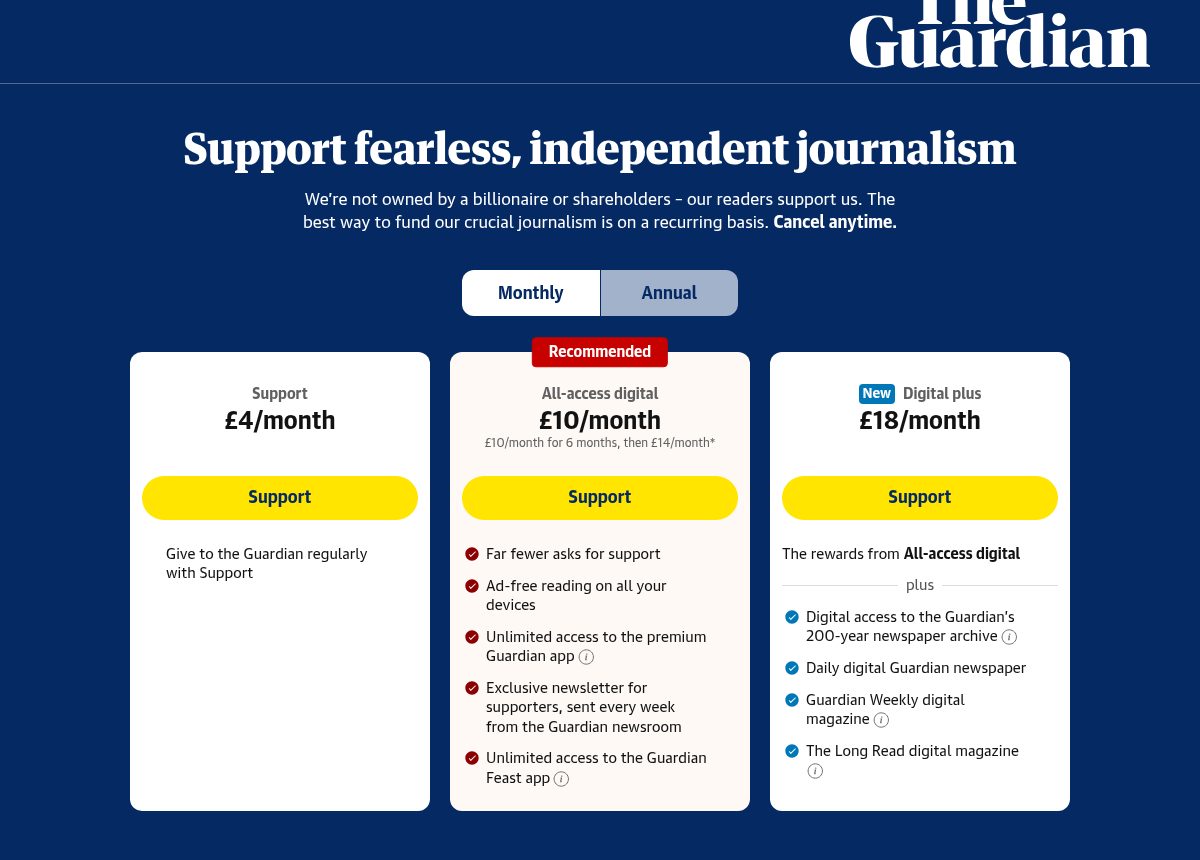
The Guardian asks readers to give back for journalism they already read free
The Guardian · Pricing · £ as captured
Welcome to Flow 👋
Flow frames its welcome discount as a thank-you
Flow · Email
Share the Love ♥️ Give $20 / Get $20
Tea Forté makes referral a two-way gift, and offers a snooze
Tea Forté · Email · $ as captured
Earn $100* when you refer a friend
Castlery frames referral as "a new beginning for them, a little thank-you for you"
Castlery · Email · $ as captured
5 new nudges, every Friday
Five real product and marketing moments, the psychology behind each, and one thing to try. Weekly issues start soon. Your email is stored with our email provider (Resend) and used only for this newsletter.