Teardowns › Homepages & product pages › Confirmation bias
ADHD Online sets $219 against $1,689, then quotes “looking for a sign”
If you sell an evaluation to people who already suspect a diagnosis, show a result that was not a diagnosis too.
Step by step
- 1Confirmation bias
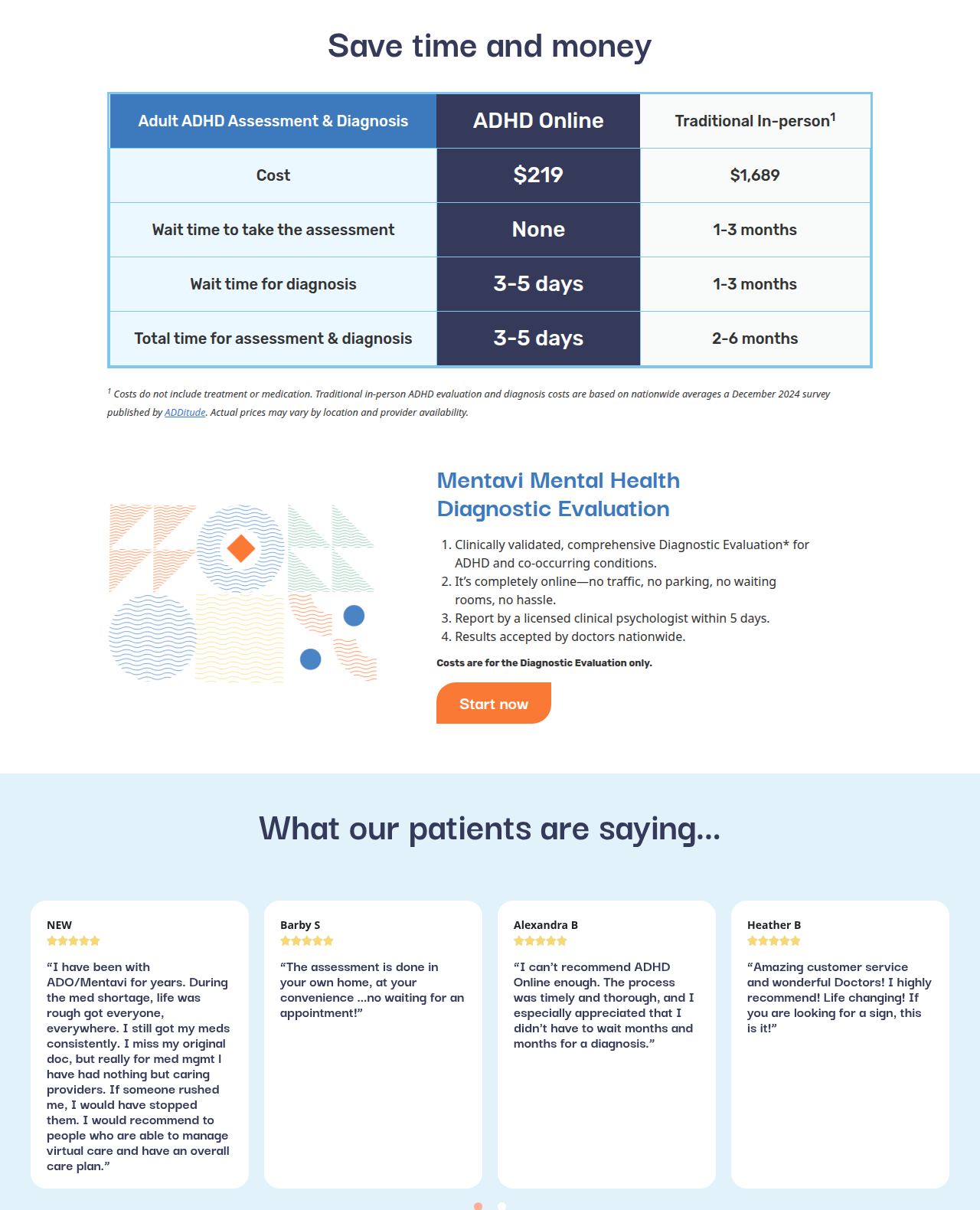
Cost row: ADHD Online $219, traditional in-person $1,689.
- 2Social proof
Heather B: “If you are looking for a sign, this is it!”
Prices quoted in dollars ($), exactly as shown on the page we captured (US-priced). Prices vary by region and change over time.
5 new nudges, every Friday
Five real product and marketing moments, one thing to try from each, and the psychology behind it. Weekly issues start soon. Your email is stored with our email provider (Resend) and used only for this newsletter.
What to steal
- If you sell an evaluation to people who already suspect a diagnosis, show a result that was not a diagnosis too.
- Put the caveat on the card, as the Snapshot does: “It’s a snapshot, not a diagnosis.”
What to test next: The ‘looking for a sign’ quote vs a quote from someone who was not diagnosed. Measure evaluation starts.
In plain words
Why it works
ADHD Online uses confirmation bias (Nickerson 1998) on a paid evaluation. Under “Save time and money”, the comparison shows ADHD Online at $219 against “Traditional In-person” at $1,689, and ADHD Online is ahead on every row in the capture: cost, wait to take the assessment, wait for diagnosis, and total time. The footnote says costs exclude treatment and medication, and that the $1,689 figure is a nationwide average from a December 2024 survey published by ADDitude, not a clinic’s price printed on this page. Under “What our patients are saying...”, Heather B’s five-star quote reads “Amazing customer service and wonderful Doctors! I highly recommend! Life changing! If you are looking for a sign, this is it!” Above this capture, on the same page, the clinical card says “Choose this if something feels off and you want a clinical answer”, the Snapshot card says it “is a snapshot, not a diagnosis”, and the clinical card says “Not every evaluation results in a diagnosis.” Whether the table or the quote lifts evaluations is not public.
Honest nudge or dark pattern?
Grey area
Grey area: a quote that tells the reader they were looking for a sign sits on a paid diagnostic evaluation. The page does say a diagnosis is not guaranteed and that treatment is separate.
Sources: Captured by Nudgeswipe, 3 Nov 2026 (US site, logged out)
Context
A US mental health homepage (ADHD Online, from Mentavi Health), logged out, on 3 Nov 2026. The Diagnostic Evaluation is listed at 3 payments of $73 ($219 total). A footnote says treatment is available in 40+ states for a separate cost.
The research
The research behind it
● Strong evidence (provisional) · More on confirmation bias, with sources →
Next: run it on your product
Try it on your own product
Opens your assistant with this teardown, our verdict and the steps above. It asks about your product first, then suggests tests you can run.
Read the prompt, or use another assistant
Grok and Cursor open with the prompt filled in. Gemini and Codex can’t take a prefilled link, so the prompt is copied and you paste it in.
Sources
- Our capture of adhdonline.com, 3 Nov 2026
- Wason (1960), On the Failure to Eliminate Hypotheses in a Conceptual Task. doi.org/10.1080/17470216008416717
- Captured by Nudgeswipe, 3 Nov 2026 (US site, logged out): adhdonline.com
Related teardowns
Linear’s pricing: ‘Free for everyone’ and 40,000 companies
Linear · Pricing page · $ as captured
Airbnb shows the total price and a “Guest favourite” badge on every card
Airbnb · Homepage · £ as captured
Todoist puts “347K+ ★★★★★ reviews” above its plans
Todoist · Pricing page
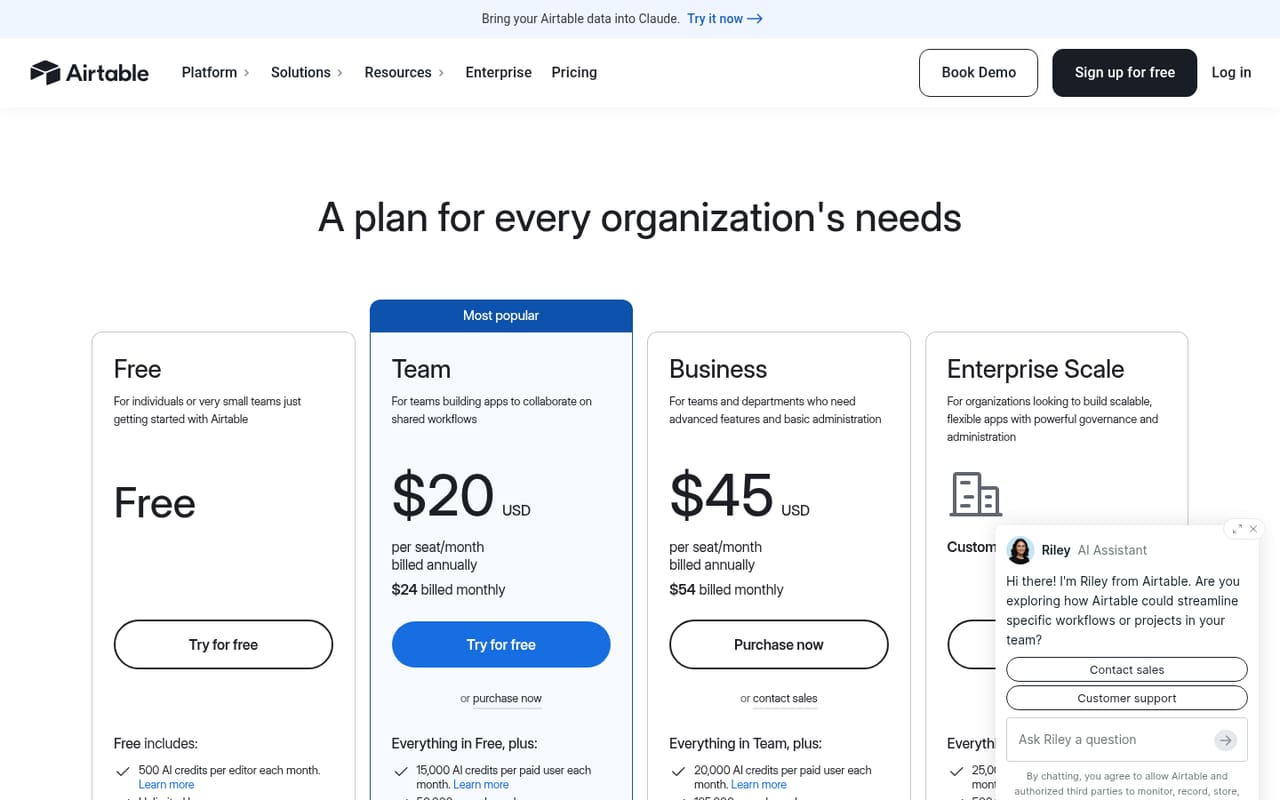
Airtable marks its Team plan “Most popular” between Free and Business
Airtable · Pricing page · $ as captured
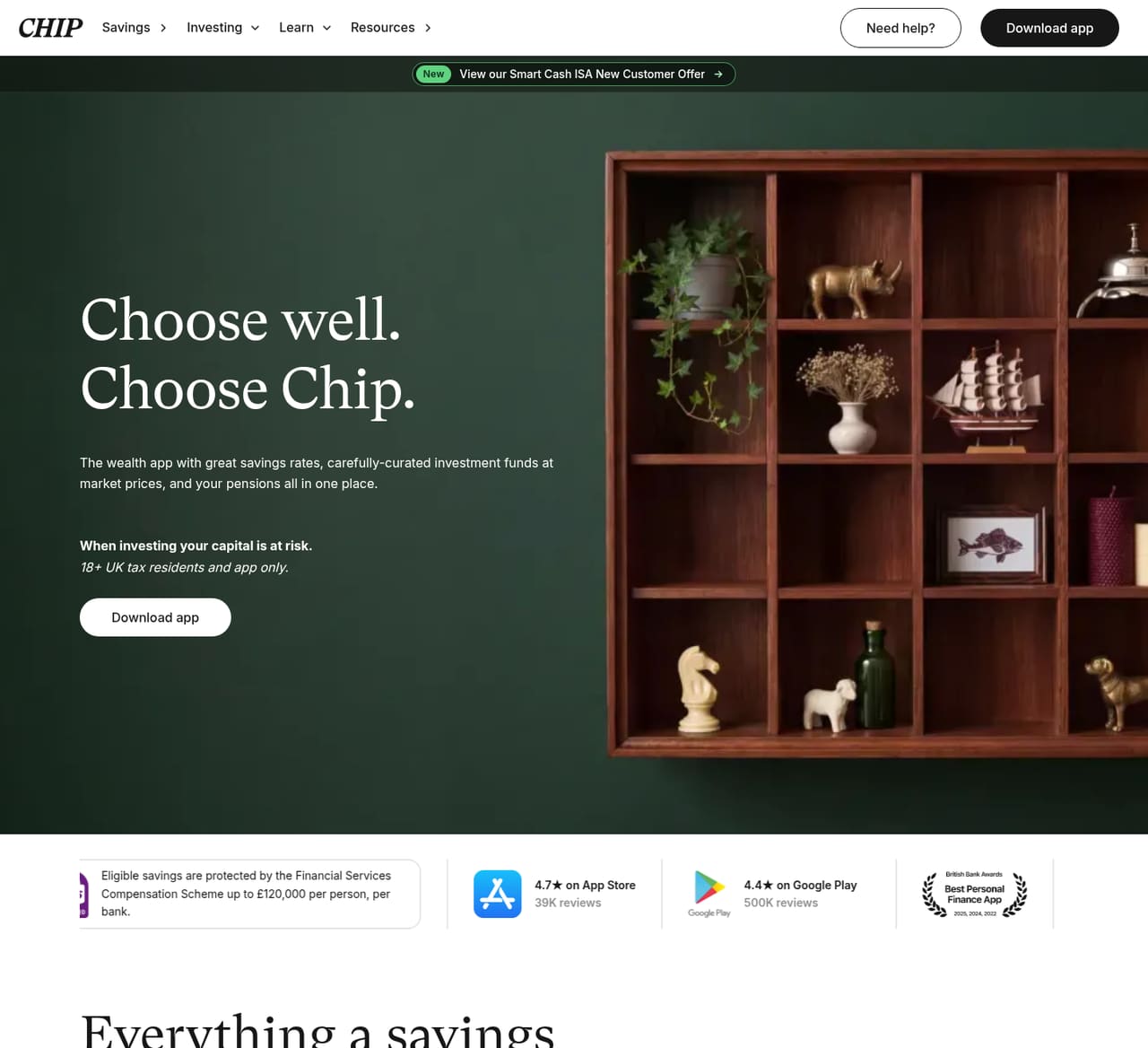
Chip leads with app-store ratings and the FSCS protection limit
Chip · Homepage · £ as captured
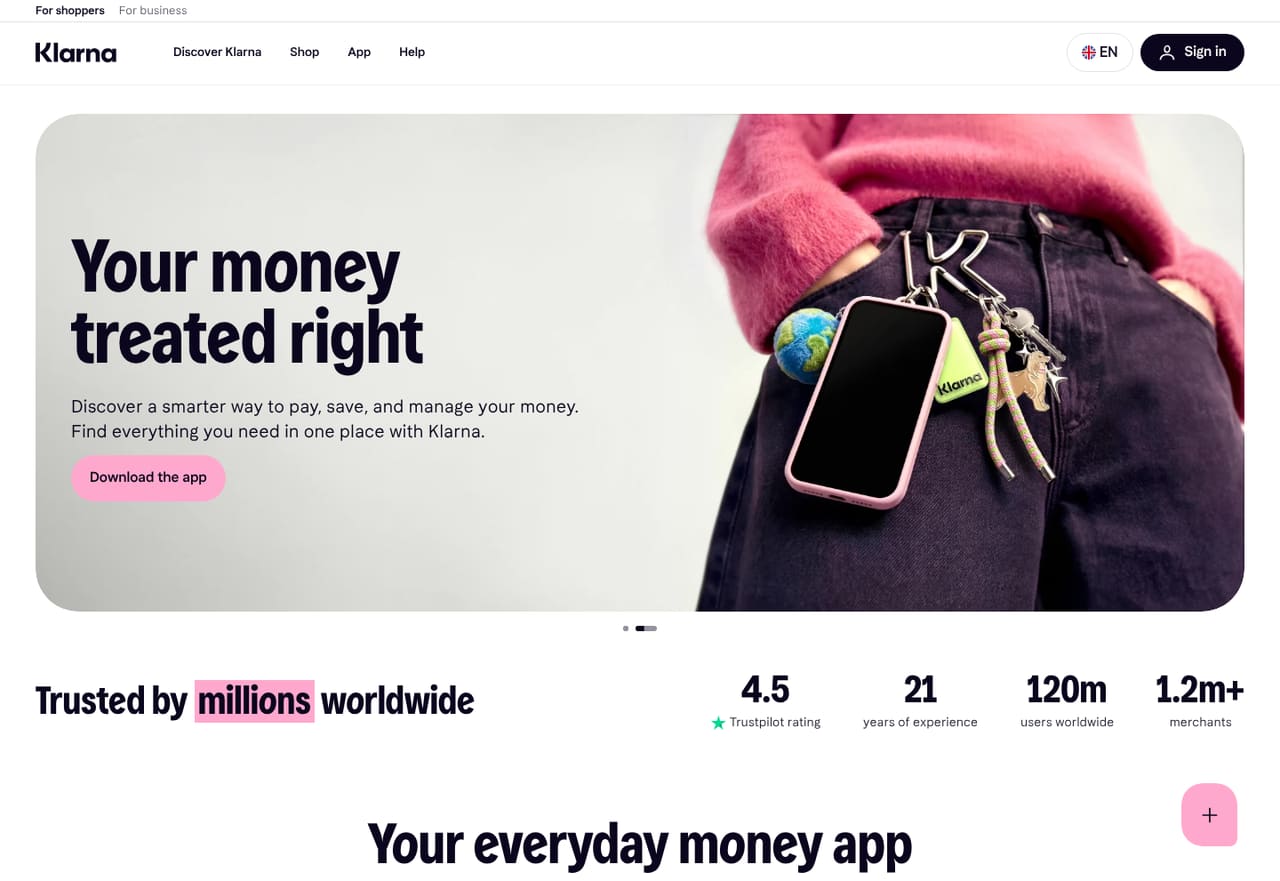
Klarna leads with “120m users” and a Trustpilot score
Klarna · Homepage
5 new nudges, every Friday
Five real product and marketing moments, one thing to try from each, and the psychology behind it. Weekly issues start soon. Your email is stored with our email provider (Resend) and used only for this newsletter.