Teardowns › Pricing & paywalls › Left-digit effect
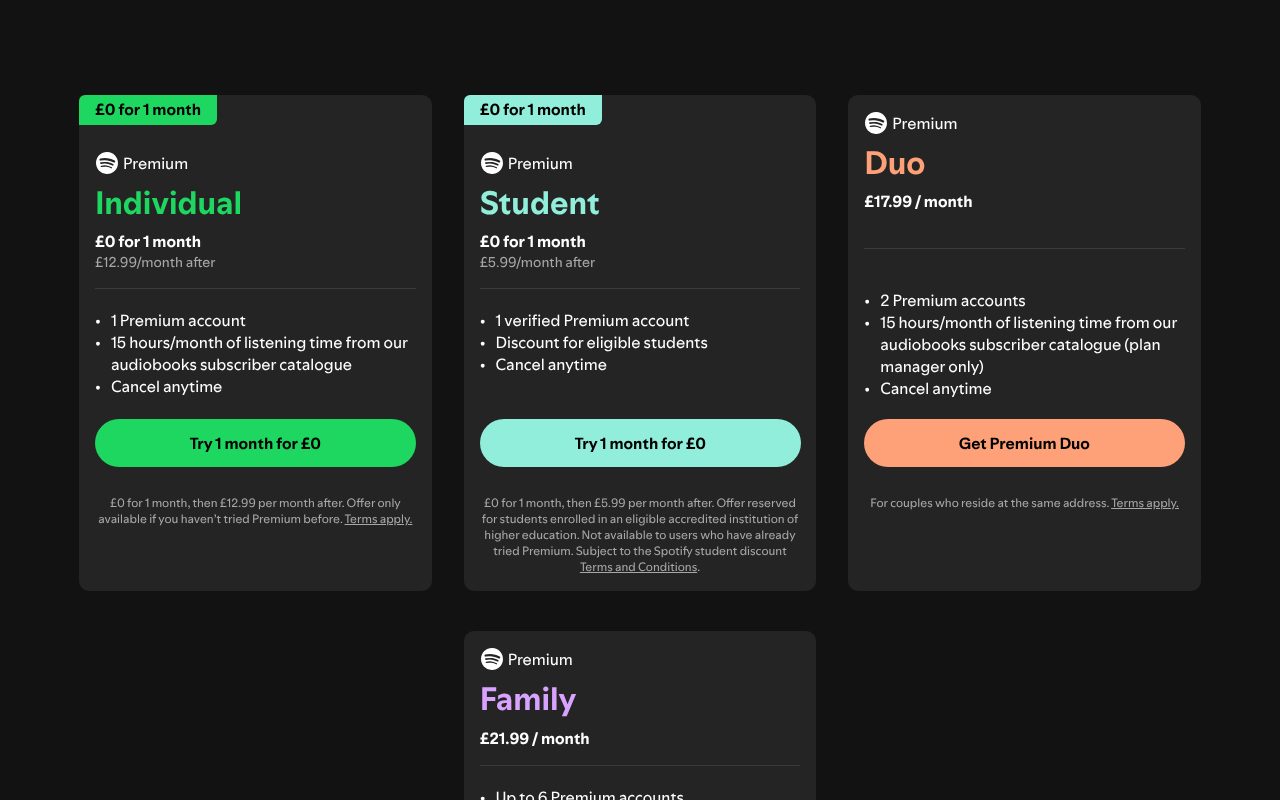
Spotify ends every Premium price in 99p, under a bold £0
If you use charm prices, print the after-trial price on the card itself, as Spotify does, not only in the terms.
Step by step
- 1Left-digit effect
Individual: “£0 for 1 month” in bold, “£12.99/month after” in grey.
- 2Left-digit effect
Duo: “£17.99 / month”. Family: “£21.99 / month”.
Prices quoted in pounds (£), exactly as shown on the page we captured. Prices vary by region and change over time.
5 new nudges, every Friday
Five real product and marketing moments, one thing to try from each, and the psychology behind it. Weekly issues start soon. Your email is stored with our email provider (Resend) and used only for this newsletter.
What to steal
- If you use charm prices, print the after-trial price on the card itself, as Spotify does, not only in the terms.
- Keep the recurring price in the same type size as the trial price if you want fewer surprised renewals.
What to test next: £12.99 vs £13 on the Individual card. Measure trial starts and month-two retention.
In plain words
Why it works
Spotify uses the left-digit effect: people judge £12.99 by its first digits, so it reads closer to £12 than to £13 (Thomas & Morwitz 2005). Every paid price on the UK plans section ends in .99: Individual “£12.99/month after”, Student “£5.99/month after”, Duo “£17.99 / month” and Family “£21.99 / month”. On Individual and Student the large figure is “£0 for 1 month”, and the .99 price sits beneath it in smaller grey text. The line under the button states the full terms: “£0 for 1 month, then £12.99 per month after. Offer only available if you haven’t tried Premium before.” Whether the .99 endings or the £0 headline lift sign-ups for Spotify is not public.
Honest nudge or dark pattern?
Conditional
Conditional: the after-trial price is on the card and in the terms line, before sign-up. It is set in smaller grey type under a bold £0, so the recurring cost is less prominent than the free month.
Sources: Captured by Nudgeswipe, 4 Nov 2026 (UK Premium page, logged out)
Context
Spotify UK Premium page, logged out, on 4 Nov 2026. The plan cards sit near the bottom of a long page under “The world is listening here.” Duo and Family showed no free month on this capture.
The research
The research behind it
● Strong evidence (provisional) · More on left-digit effect, with sources →
Next: run it on your product
Try it on your own product
Opens your assistant with this teardown, our verdict and the steps above. It asks about your product first, then suggests tests you can run.
Read the prompt, or use another assistant
Grok and Cursor open with the prompt filled in. Gemini and Codex can’t take a prefilled link, so the prompt is copied and you paste it in.
More pricing psychology examples →
Similar tactic elsewhereMusicbed values its free trial at $177 and explains the renewalMusicbed · Zero-price effectSources
- Our capture of spotify.com, 4 Nov 2026
- Thomas & Morwitz (2005), Penny Wise and Pound Foolish: The Left‐Digit Effect in Price Cognition. doi.org/10.1086/429600
- Captured by Nudgeswipe, 4 Nov 2026 (UK Premium page, logged out): spotify.com
Related teardowns
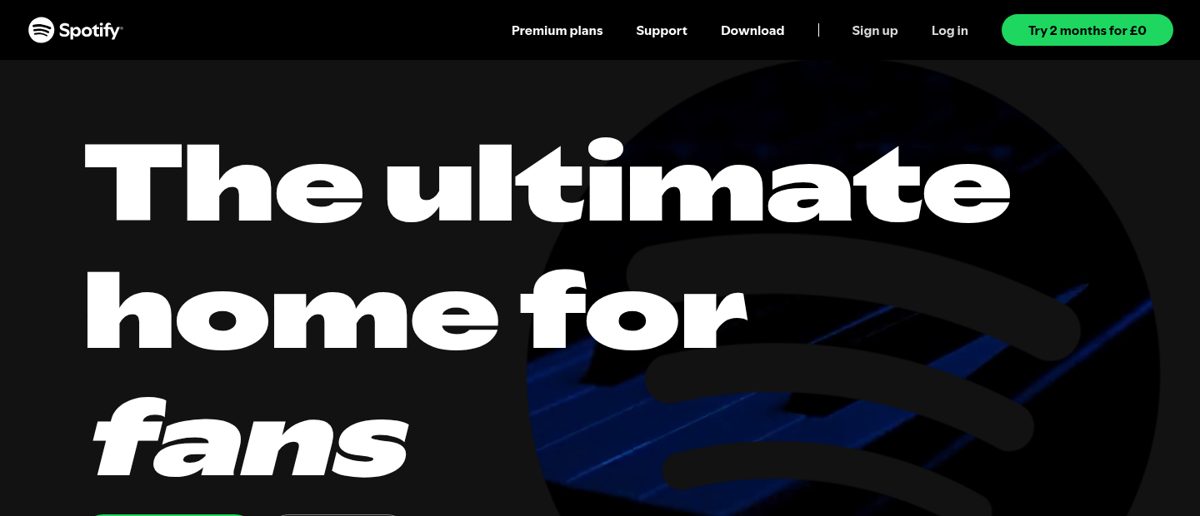
Spotify leads with “£0” and spells out the price after
Spotify · Pricing · £ as captured

PureGym pairs a £0 joining fee with “ends Monday”
PureGym · Homepage banner · £ as captured
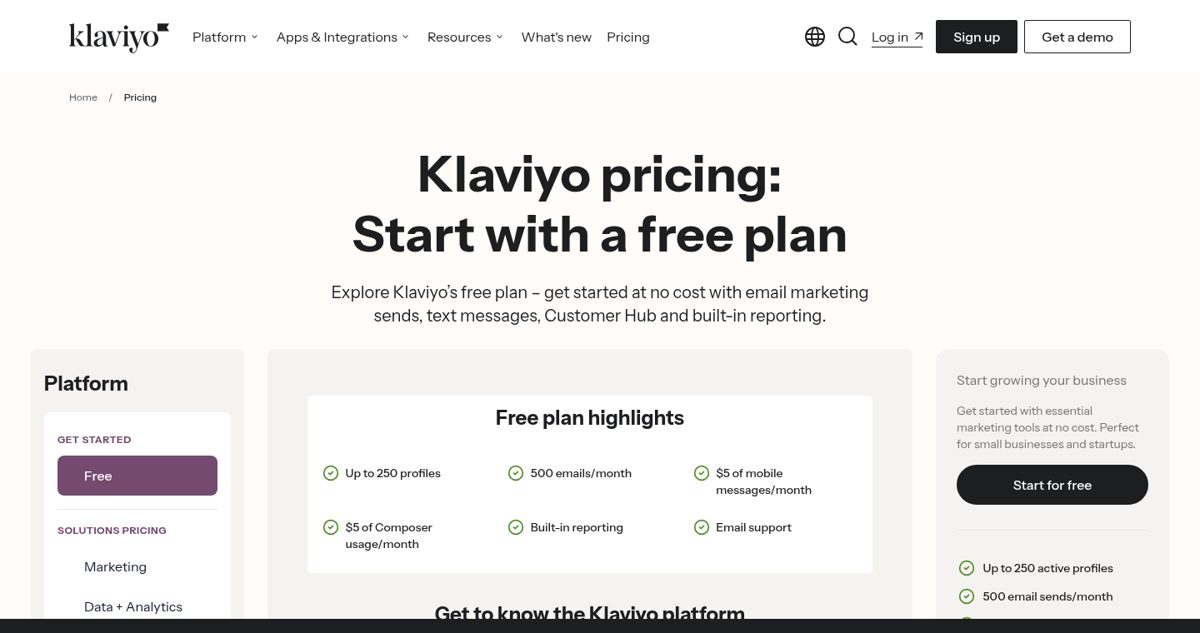
Klaviyo leads with ‘Start with a free plan’ and lists the caps
Klaviyo · Pricing page · $ as captured
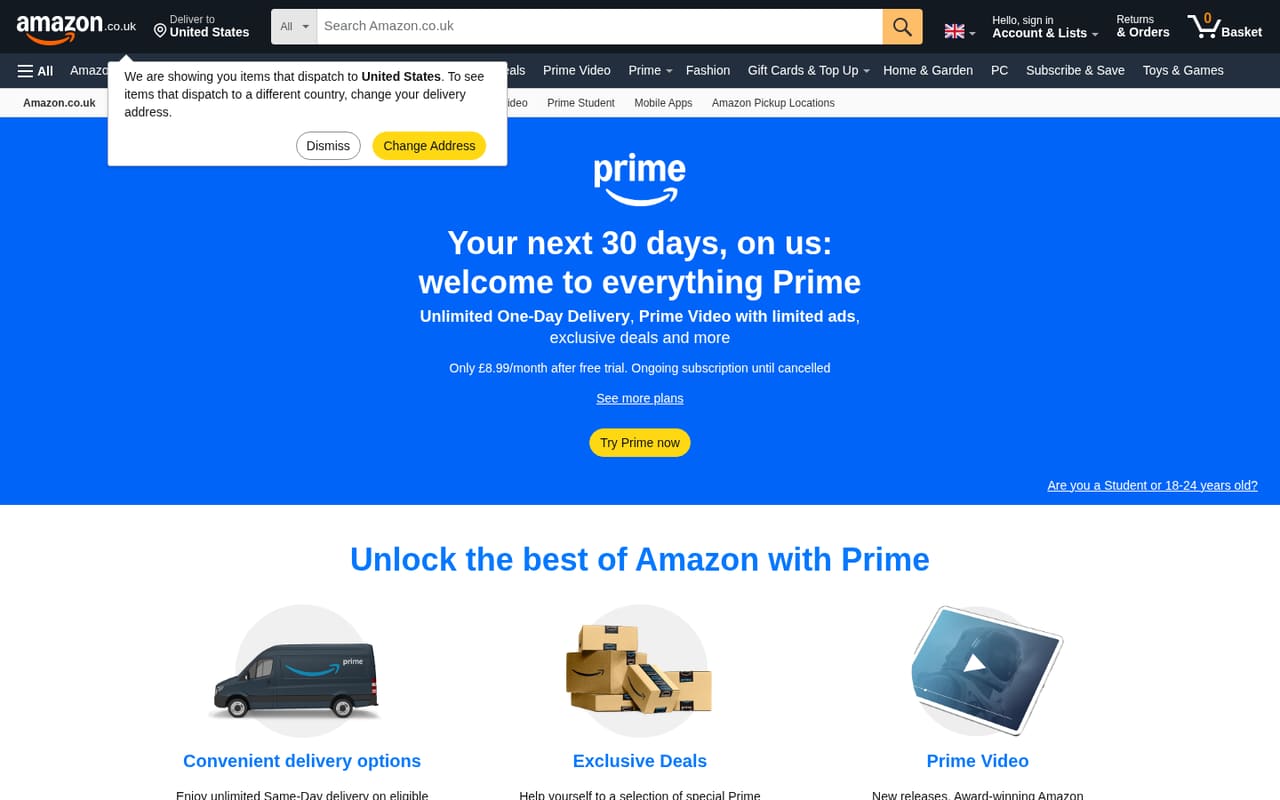
Amazon frames the Prime trial as “30 days, on us”
Amazon · Paywall / trial
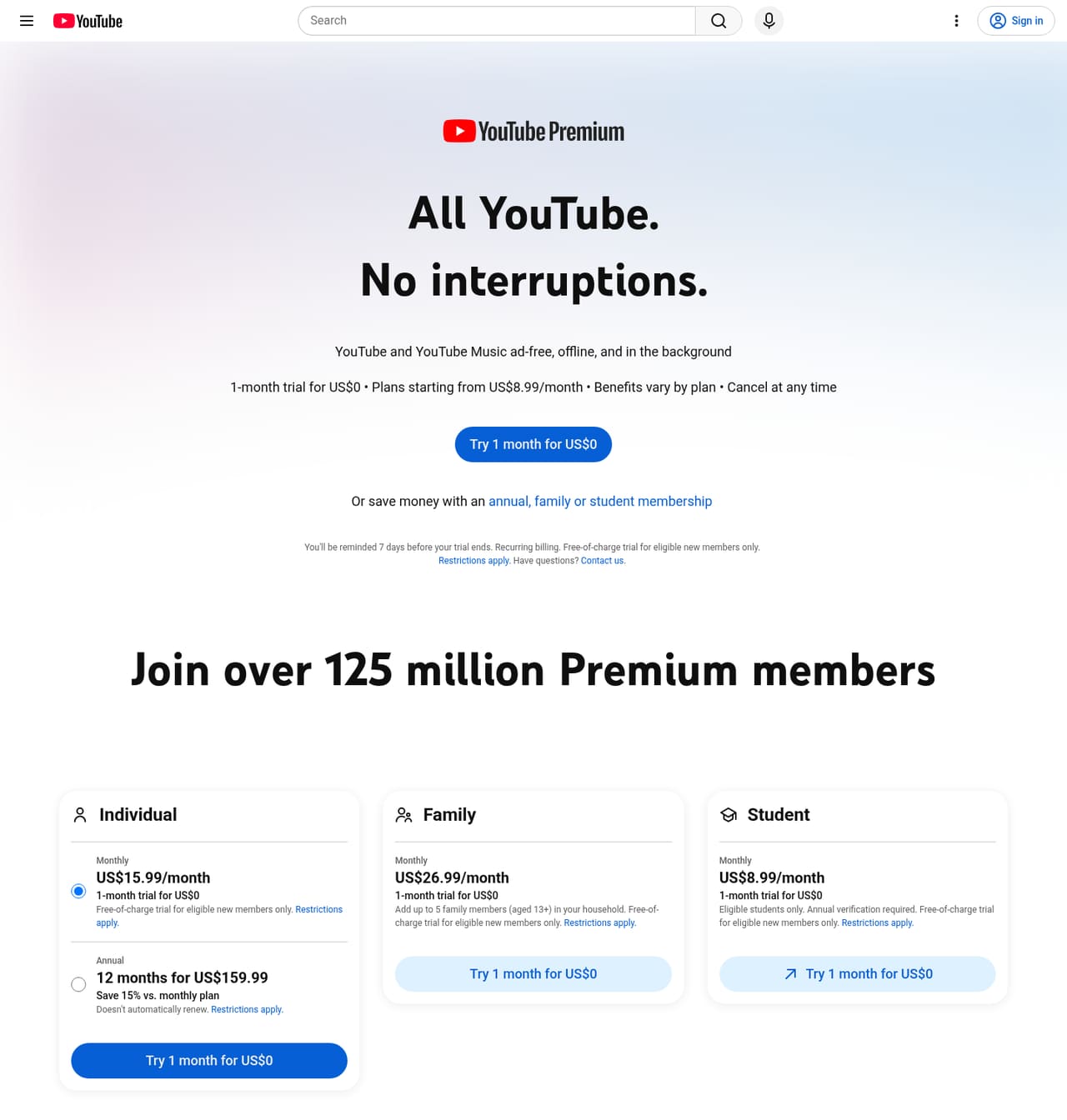
YouTube Premium promises a reminder 7 days before the free month ends
YouTube · Paywall / trial · $ as captured
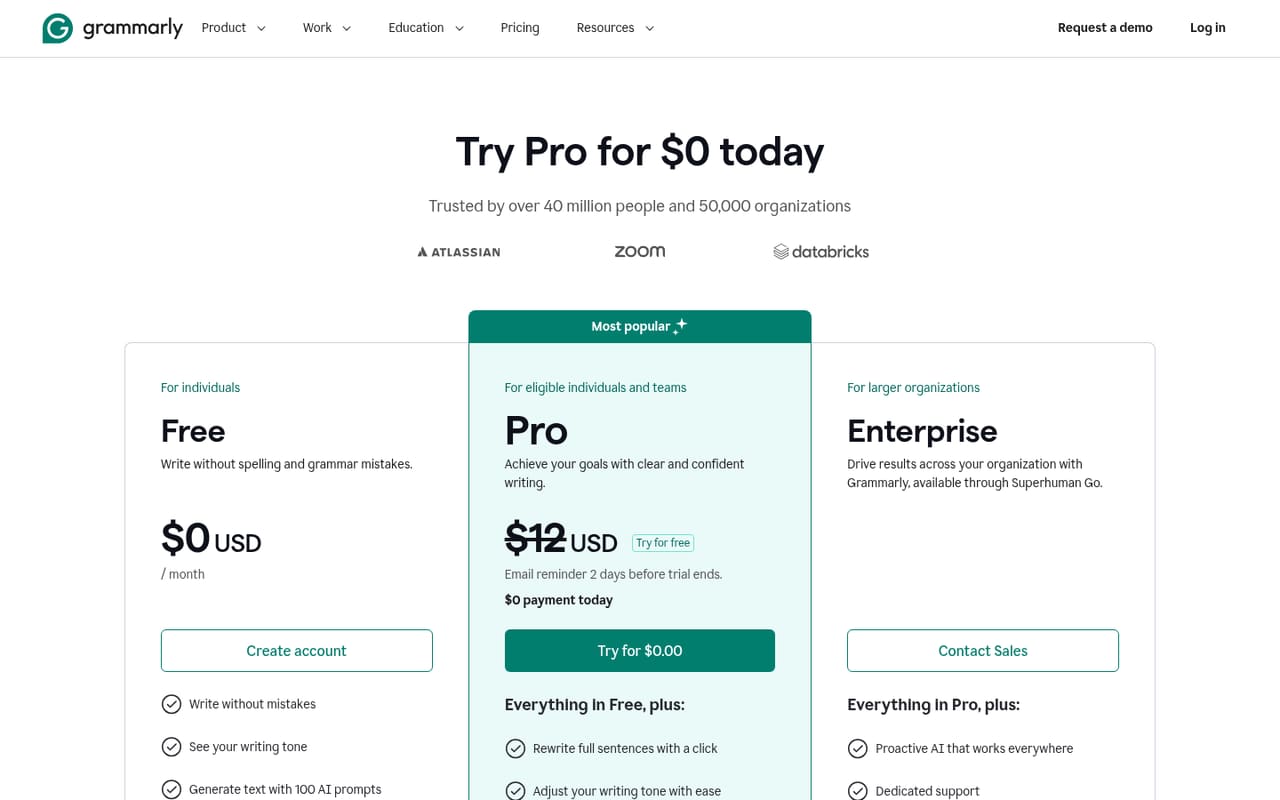
Grammarly says “$0 payment today” and promises a reminder 2 days before the trial ends
Grammarly · Pricing page · $ as captured
5 new nudges, every Friday
Five real product and marketing moments, one thing to try from each, and the psychology behind it. Weekly issues start soon. Your email is stored with our email provider (Resend) and used only for this newsletter.